
Wisdom Tooth Extraction in Chinatown NYC | L.E.S. Dental Group
Blog:Wisdom Tooth Extraction in Chinatown NYC | L.E.S. Dental Group
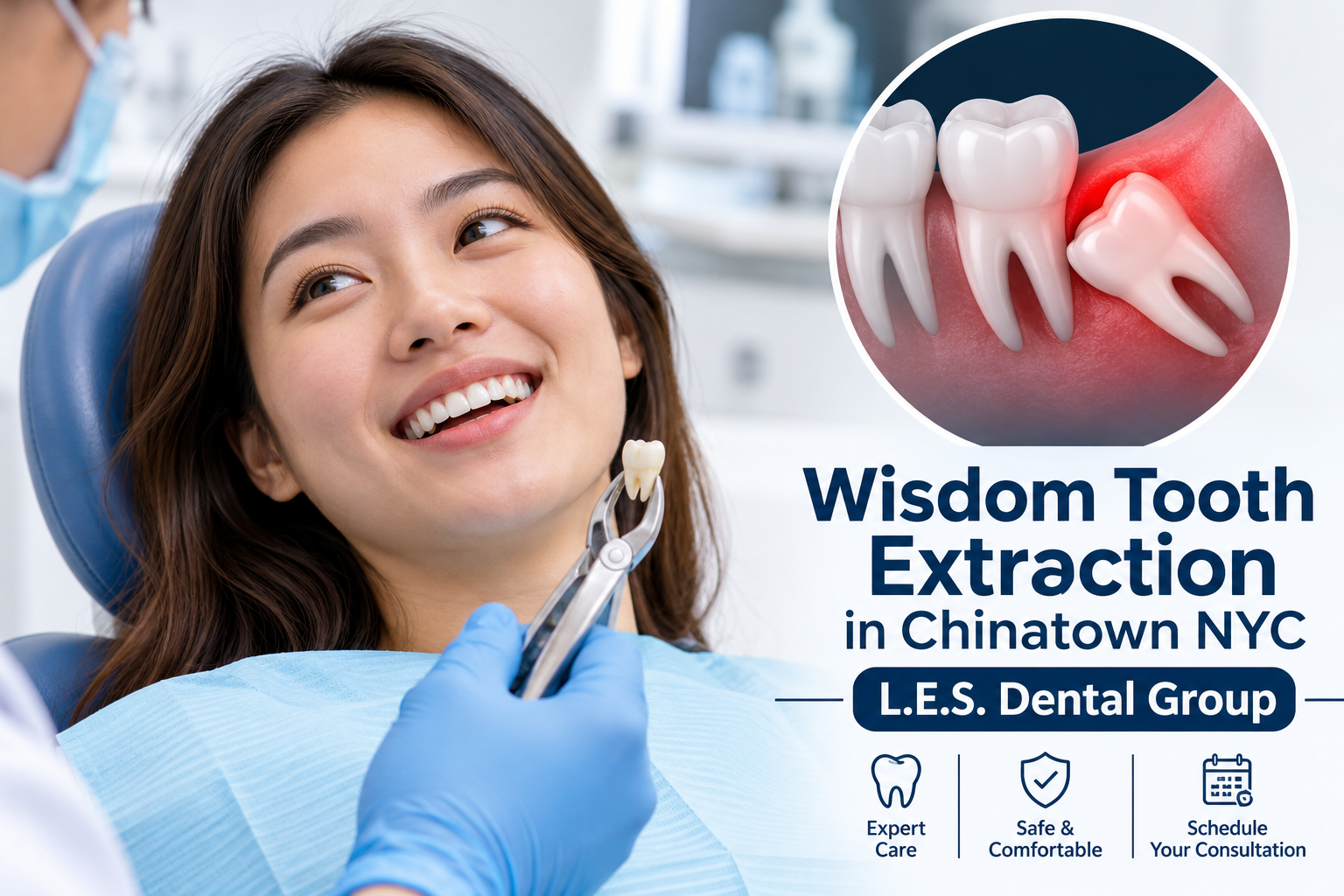
Wisdom teeth are the last set of molars to develop, usually appearing between the ages of 17 and 25. While some people experience no problems with their wisdom teeth, others may develop pain, swelling, infections, or overcrowding when these teeth do not have enough room to grow properly. In such cases, wisdom tooth extraction may be recommended to protect oral health and prevent further dental complications.
If you are experiencing wisdom tooth pain or looking for professional wisdom tooth extraction in Chinatown NYC, L.E.S. Dental Group provides dental care to help patients address wisdom tooth concerns and maintain healthy smiles. Whether you have an impacted wisdom tooth, recurring gum inflammation, or discomfort at the back of your mouth, a dental evaluation can help determine the most appropriate treatment.
What Are Wisdom Teeth?
Wisdom teeth are the third and final set of molars located at the very back of your mouth. Most adults develop up to four wisdom teeth, with one appearing in each corner of the mouth.
These teeth usually emerge during the late teenage years or early twenties. However, not everyone develops all four wisdom teeth. Some people may have fewer, while others may not develop any at all.
When wisdom teeth grow correctly, have enough space, and can be cleaned properly, they may not require removal. However, problems can develop when they grow at an unusual angle, remain trapped beneath the gums, or partially emerge.
A dentist can examine your teeth and use dental X-rays when necessary to determine whether wisdom tooth removal is recommended.
Signs You May Need Wisdom Tooth Extraction In ChinaTown NYC
Wisdom teeth do not always cause noticeable symptoms. However, when they become impacted or create problems for surrounding teeth and gums, several warning signs may appear.
If you experience any of the following symptoms, consider scheduling a dental examination.
1. Pain at the Back of Your Mouth
One of the most common signs of wisdom tooth complications is pain near the back of the jaw. Discomfort may develop gradually or appear suddenly, especially when a wisdom tooth begins pushing against nearby teeth.
The pain may become more noticeable while chewing, opening your mouth, or brushing your teeth.
2. Swollen or Bleeding Gums
When wisdom teeth partially emerge, food particles and bacteria can become trapped around the surrounding gum tissue. This may cause inflammation, tenderness, redness, and bleeding.
In some cases, patients develop a condition called pericoronitis, which is an infection or inflammation of the gum tissue surrounding a partially erupted wisdom tooth.
3. Impacted Wisdom Teeth
An impacted wisdom tooth cannot fully emerge through the gums because it lacks sufficient space or is blocked by another tooth.
Impacted wisdom teeth may grow sideways, remain beneath the gum tissue, or become trapped within the jawbone. Depending on their position and condition, they may require professional evaluation and removal.
4. Jaw Pain and Stiffness
Wisdom tooth complications can sometimes cause discomfort around the jaw. You may experience tenderness, difficulty opening your mouth, or pain when chewing.
Persistent jaw discomfort should be evaluated by a dental professional to identify its underlying cause.
5. Bad Breath or Unpleasant Taste
Partially erupted wisdom teeth can create small spaces where food debris and bacteria accumulate. These areas may be difficult to clean with regular brushing and flossing.
As bacteria build up, you may experience persistent bad breath or an unpleasant taste in your mouth.
6. Damage to Nearby Teeth
Wisdom teeth that grow at an incorrect angle may put pressure on neighbouring molars. In some situations, they can contribute to decay, gum problems, or damage to the adjacent teeth.
Early evaluation can help identify potential complications before they become more serious.
What Is Wisdom Tooth Extraction?
Wisdom tooth extraction is a dental procedure that involves removing one or more third molars from the back of the mouth.
The procedure may be recommended when wisdom teeth are impacted, infected, damaged, difficult to clean, or associated with other oral health complications.
The complexity of the extraction depends on the position of the tooth and whether it has fully erupted.
There are generally two types of wisdom tooth extraction.
Simple Wisdom Tooth Extraction In Chinatown
A simple extraction is usually performed when the wisdom tooth has fully emerged through the gums and is accessible.
The dentist uses appropriate instruments to gently loosen and remove the tooth. Local anaesthesia is typically used to help keep the procedure comfortable.
Surgical Wisdom Tooth Extraction
Surgical extraction may be necessary when a wisdom tooth is impacted or has not fully emerged through the gums.
Depending on the tooth's position, the procedure may involve making a small incision in the gum tissue. In some cases, a small amount of surrounding bone may need to be removed, or the tooth may be divided into smaller sections for easier removal.
The appropriate approach depends on your individual dental condition and examination findings.
What Happens During a Wisdom Tooth Extraction?
Understanding the extraction process can help reduce anxiety and make you feel more prepared for your appointment.
At L.E.S. Dental Group, patients seeking wisdom tooth extraction in Chinatown NYC can begin with a dental evaluation to understand their condition and discuss suitable treatment options.
Here is what the process generally involves:
Step 1: Initial Dental Examination
The dentist examines your teeth, gums, and surrounding tissues to identify any signs of infection, inflammation, or impaction.
Dental X-rays may be recommended to assess the position of your wisdom teeth, their roots, and their relationship to nearby structures.
Step 2: Discussing Your Treatment Options
After evaluating your condition, the dentist explains whether extraction is necessary and what type of procedure may be appropriate.
You can also discuss your concerns, expected recovery time, anaesthesia options, and aftercare instructions.
Step 3: Preparing the Treatment Area
Before extraction, the treatment area is numbed using local anaesthesia. This helps minimise discomfort during the procedure.
For certain surgical extractions, additional sedation options may be considered depending on the clinical setting and individual needs.
Step 4: Removing the Wisdom Tooth
The dentist carefully removes the wisdom tooth using the appropriate extraction technique.
For a simple extraction, the tooth is gently loosened and removed. For an impacted wisdom tooth, a surgical approach may be necessary.
Step 5: Aftercare Instructions
Once the tooth has been removed, the dentist provides instructions to support healing and reduce the risk of complications.
You may receive guidance about controlling bleeding, managing swelling, eating soft foods, and maintaining oral hygiene during recovery.
How Long Does It Take to Recover After Wisdom Tooth Extraction?
Recovery time varies depending on the complexity of the procedure, the number of teeth removed, and your overall oral health.
Most patients begin feeling better within a few days, although complete healing of the extraction site takes longer.
Here is a general recovery timeline:
- First 24 hours: Mild bleeding, swelling, and discomfort may occur. A blood clot begins forming in the extraction site.
- Days 2–3: Swelling may become more noticeable before gradually improving. Discomfort should begin to decrease.
- Days 4–7: Many patients experience significant improvement and can gradually return to normal daily activities.
- One to two weeks: Soft tissue healing continues, although surgical extraction sites may take longer to settle.
- Following weeks: The underlying bone continues to heal over several weeks or months.
Your dentist will provide specific recovery instructions based on your procedure.
Tips for a Smooth Recovery After Wisdom Tooth Removal
Following proper aftercare instructions is essential for protecting the extraction site and supporting healing.
Here are some helpful recommendations after wisdom tooth extraction.
1. Rest After Your Procedure
Give yourself time to recover, especially during the first 24 hours. Avoid strenuous exercise, heavy lifting, and activities that may increase bleeding.
2. Use Ice Packs
Applying an ice pack to the outside of your cheek may help reduce swelling during the first day. Follow your dentist's instructions regarding application intervals.
3. Eat Soft Foods
Choose foods that require minimal chewing while your mouth heals.
Suitable options may include:
- Yoghurt
- Mashed potatoes
- Scrambled eggs
- Smooth soups served lukewarm
- Applesauce
- Soft pasta
- Oatmeal
Avoid hard, crunchy, spicy, and very hot foods until your dentist advises that it is safe to resume them.
4. Avoid Drinking Through Straws
Using a straw creates suction inside the mouth, which can dislodge the blood clot forming in the extraction site.
This may increase the risk of developing dry socket, a painful condition that can delay healing.
5. Maintain Gentle Oral Hygiene
Continue brushing your teeth carefully, but avoid disturbing the extraction area.
Your dentist may recommend gentle saltwater rinses after the first 24 hours. Avoid vigorous rinsing or spitting.
6. Follow Medication Instructions
Take prescribed or recommended pain medication according to your dentist's instructions.
If you experience increasing pain, persistent bleeding, fever, or worsening swelling, contact your dental provider.
What Is Dry Socket After Wisdom Tooth Extraction?
Dry socket, also known as alveolar osteitis, is a possible complication that occurs when the blood clot at the extraction site becomes dislodged or dissolves before the wound has adequately healed.
The blood clot protects the underlying bone and nerves during the healing process. When it is lost, the area may become exposed and painful.
Common symptoms include:
- Severe or worsening pain a few days after extraction.
- Pain that may spread towards the ear or jaw.
- An unpleasant taste in the mouth.
- Bad breath.
- An extraction site where the blood clot appears to be missing.
Dry socket requires professional dental attention. Your dentist can clean the affected area and provide appropriate treatment to relieve discomfort and support healing.
Is Wisdom Tooth Extraction Painful?
It is normal to feel nervous before a dental extraction, especially if you have never undergone the procedure before.
However, modern dental techniques and local anaesthesia help make wisdom tooth removal more manageable.
During the procedure, you should generally feel pressure or movement rather than sharp pain. Some tenderness, swelling, and discomfort are expected after the anaesthesia wears off.
The level of discomfort depends on factors such as:
- Whether the tooth is fully erupted or impacted.
- The position and shape of its roots.
- Whether surgical extraction is necessary.
- The number of wisdom teeth being removed.
- Your individual healing response.
Your dentist in Chinatown can explain what to expect and recommend suitable pain-management options.
When Should You Have Your Wisdom Teeth Removed?
Not every wisdom tooth needs to be extracted. If your wisdom teeth are healthy, fully erupted, positioned correctly, and easy to clean, your dentist may recommend monitoring them instead.
However, extraction may be appropriate when there is evidence of:
- Repeated infection or inflammation.
- Untreated tooth decay.
- Damage to neighbouring teeth.
- Gum disease around the wisdom tooth.
- Cysts or other associated pathology.
- Persistent symptoms linked to the tooth.
A professional dental examination helps determine whether removal is necessary. Preventive removal should not be assumed to be necessary for every patient.
If you experience facial swelling, fever, difficulty swallowing, or difficulty breathing, seek urgent medical or dental attention.
Why Choose L.E.S. Dental Group for Wisdom Tooth Extraction in Chinatown NYC?
Finding the right dental provider is important when dealing with wisdom tooth pain or impacted teeth. Patients should feel comfortable discussing their concerns, understanding their treatment options, and receiving appropriate aftercare guidance.
L.E.S. Dental Group provides dental services for patients seeking care in the Chinatown and Lower East Side areas of New York City.
When considering wisdom tooth extraction, patients can benefit from:
Comprehensive Dental Evaluation: A dental examination helps identify wisdom tooth complications and determine whether extraction is appropriate.
Personalised Treatment Planning: Every patient's dental condition is different. Treatment recommendations should consider the position of the tooth, symptoms, and overall oral health.
Patient Education: Understanding the extraction process and recovery expectations can help patients feel more confident about their treatment.
Convenient Chinatown and Lower East Side Location: L.E.S. Dental Group serves patients looking for dental care in Lower Manhattan, including Chinatown.
If you are experiencing wisdom tooth discomfort, scheduling an examination is a helpful first step towards understanding your treatment options.
Frequently Asked Questions About Wisdom Tooth Extraction
1. At What Age Should Wisdom Teeth Be Removed?
Wisdom teeth commonly emerge between the ages of 17 and 25. However, there is no fixed age for extraction. Removal depends on the position of the teeth, symptoms, and whether complications are present.
2. Can I Have All Four Wisdom Teeth Removed at Once?
Yes, in some cases, all four wisdom teeth can be removed during one appointment. However, this depends on their position, the complexity of the extractions, and your overall health. Your dentist will determine whether this approach is appropriate.
3. How Long Does Wisdom Tooth Extraction Take?
A simple extraction may take only a short time, while surgical removal of impacted wisdom teeth can take longer. The total appointment time depends on the number of teeth and the complexity of the procedure.
4. Can I Go Back to Work After Wisdom Tooth Removal?
Many patients can return to normal activities within a few days. However, recovery depends on the complexity of the extraction. If you undergo surgical removal, you may need additional time to rest.
5. What Can I Eat After Wisdom Tooth Extraction?
Soft foods such as yoghurt, mashed potatoes, scrambled eggs, and lukewarm soups are generally suitable during the initial recovery period. Avoid hard, crunchy, spicy, and chewy foods until the extraction site has healed sufficiently.
6. What Happens If I Do Not Remove an Impacted Wisdom Tooth?
Some impacted wisdom teeth can remain problem-free and may only require monitoring. Others can contribute to infections, decay, gum disease, or damage to nearby teeth. Your dentist can evaluate the risks and recommend an appropriate course of action.
7. How Much Does Wisdom Tooth Extraction Cost in Chinatown NYC?
The cost depends on whether the extraction is simple or surgical, the position of the tooth, and the complexity of the procedure. Dental insurance coverage may also affect your out-of-pocket expenses. Contact L.E.S. Dental Group to discuss examination fees, treatment costs, and available payment options.
Schedule a Wisdom Tooth Consultation at L.E.S. Dental Group
Wisdom tooth pain should not be ignored, particularly when it is accompanied by swollen gums, recurring infections, jaw discomfort, or difficulty chewing.
Whether you have an impacted wisdom tooth or are experiencing persistent discomfort at the back of your mouth, a professional dental examination can help identify the problem and determine whether extraction is necessary.
At L.E.S. Dental Group, patients looking for wisdom tooth extraction in Chinatown NYC can take the first step towards better oral health by scheduling a dental consultation.
Do not wait until discomfort becomes a bigger problem. Contact L.E.S. Dental Group today to discuss your wisdom tooth concerns and explore your treatment options.
Quick Links

Keep In Touch
For non-urgent questions or to learn more about our services, contact us today!
© 2026 L.E.S. Dental Group. All rights Reserved - Accessibility Statement - Privacy Policy - Sitemap
Managed and Designed by 