
Root Canal Treatment in Lower Manhattan | L.E.S. Dental Group
Blog:Root Canal Treatment in Lower Manhattan | L.E.S. Dental Group
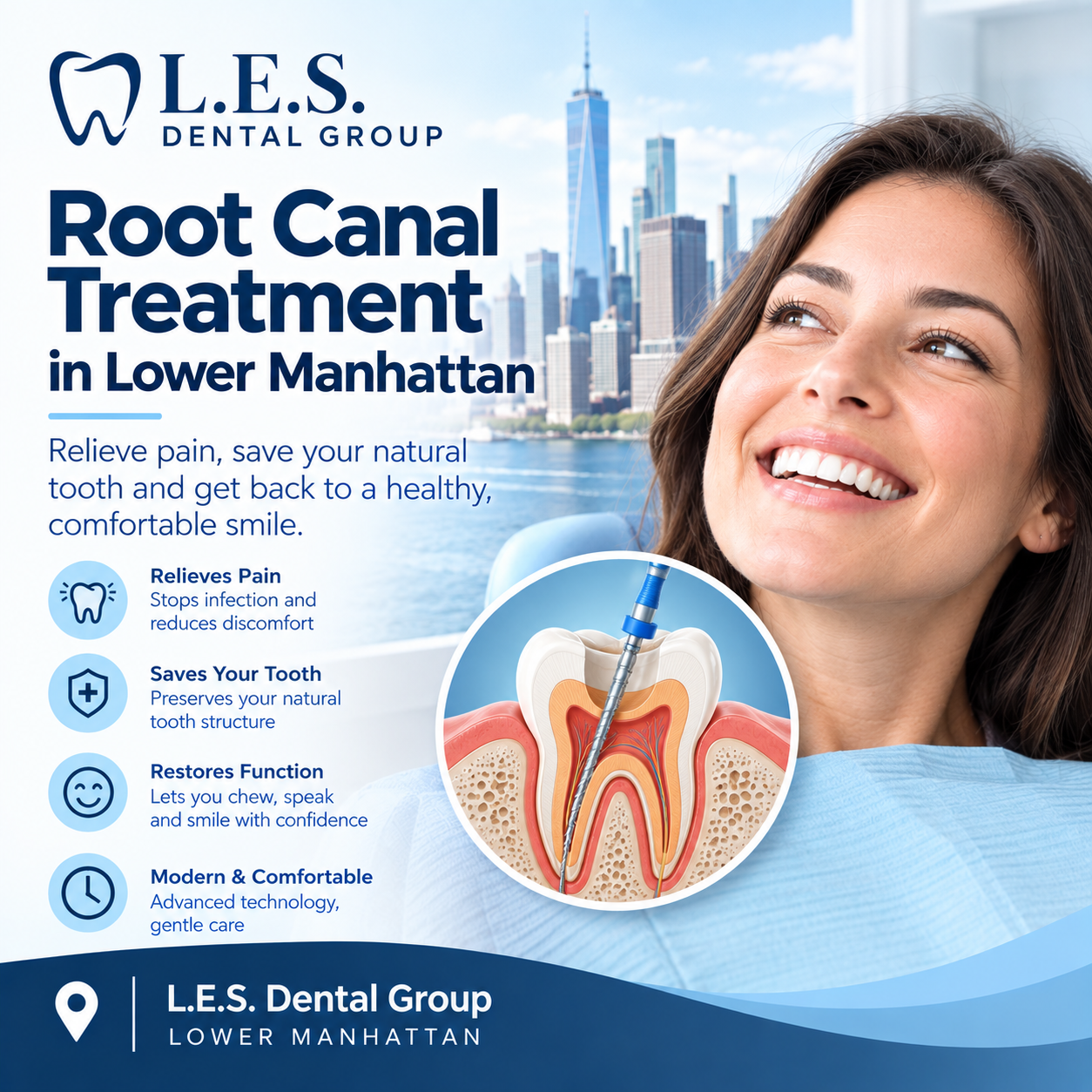
A persistent toothache, sensitivity to hot or cold, or pain when biting can sometimes be a sign of an infection or inflammation inside a tooth. When the inner pulp of a tooth becomes damaged or infected, root canal treatment may be recommended to remove the infection and preserve the natural tooth.
If you are experiencing tooth pain or have been told that you may need a root canal, L.E.S. Dental Group provides restorative dental care for patients looking for root canal treatment in Lower Manhattan.
Root canal therapy can help remove infected tissue, clean and disinfect the inside of the tooth, and restore the tooth so it can continue to function.
What Is Root Canal Treatment?
Root canal treatment, also called root canal therapy, is a dental procedure used to treat infection or inflammation affecting the pulp inside a tooth.
The pulp contains nerves, blood vessels, and connective tissue. When deep decay, cracks, trauma, or repeated dental procedures damage the pulp, bacteria can enter the inner part of the tooth and cause an infection.
During root canal treatment, the dentist removes the damaged or infected pulp, cleans and disinfects the inside of the tooth, and seals the root canals. A dental filling or crown may then be used to restore and protect the tooth.
The goal of root canal therapy is to eliminate the source of infection while preserving your natural tooth whenever possible.
Why Might You Need a Root Canal?
A root canal may be necessary when the pulp inside a tooth becomes severely inflamed or infected.
Common causes include:
- Deep tooth decay
- Cracked or fractured teeth
- Dental trauma
- Repeated dental procedures on the same tooth
- Severe tooth damage
- Bacteria reaching the inner pulp
Without appropriate treatment, an infected tooth may continue to cause pain and can potentially lead to an abscess or infection around the tooth.
A dental examination is necessary to determine whether root canal treatment is appropriate for your condition.
Signs You May Need Root Canal Treatment
Symptoms of an infected or damaged tooth can vary. Some patients experience significant discomfort, while others may have few or no symptoms.
Possible signs include:
Persistent Tooth Pain
A toothache that does not go away can indicate a problem involving the pulp or tissues surrounding the tooth. Pain may be constant or may come and go.
Sensitivity to Hot and Cold
If a tooth remains sensitive to hot or cold temperatures after the stimulus has been removed, it may indicate damage or inflammation affecting the pulp.
Pain When Biting or Chewing
Discomfort when biting down can be associated with inflammation around the tooth or problems affecting the tooth's internal structure.
Swelling Around the Tooth
Swelling around a tooth or gum may be associated with a dental infection and should be evaluated by a dentist.
Tooth Discoloration
A tooth that becomes noticeably darker than surrounding teeth may have experienced damage to its internal tissues.
A Gum Abscess or Pimple
A small bump on the gum near a tooth can sometimes indicate an infection. Even if pain is minimal, it is important to have the area evaluated.
Not everyone with these symptoms needs a root canal. However, persistent dental symptoms should be assessed by a qualified dental professional.
What Happens During Root Canal Treatment?
The exact procedure varies depending on the tooth and severity of the problem, but root canal therapy generally involves several steps.
1. Examination and Diagnosis
Your dentist will examine the affected tooth and may take dental X-rays or other images. This helps determine the source of the problem and whether root canal treatment is appropriate.
2. Local Anaesthesia
Local anaesthesia is typically used to numb the affected area. This helps make the procedure more comfortable.
3. Removing the Infected Pulp
The dentist creates a small opening in the tooth and carefully removes the damaged or infected pulp from inside the tooth.
4. Cleaning the Root Canals
The root canals are cleaned and shaped to remove bacteria and damaged tissue. The canals are then disinfected as part of the treatment process.
5. Sealing the Tooth
Once the canals have been cleaned, they are filled and sealed to help prevent bacteria from entering the treated area again.
6. Restoring the Tooth
After root canal therapy, the tooth may require a filling or dental crown depending on how much tooth structure remains and which tooth has been treated.
A crown can provide additional protection for a weakened tooth and help restore its shape and function.
Does Root Canal Treatment Hurt?
Many patients worry that root canal treatment will be painful. Modern dental techniques and local anaesthesia are used to help keep patients comfortable during the procedure.
The tooth may feel sensitive or uncomfortable for a few days following treatment as the surrounding tissues recover. Your dentist can provide aftercare instructions and advise you about managing any temporary discomfort.
If you experience significant or worsening pain after treatment, contact your dental office for further evaluation.
Benefits of Root Canal Treatment In lower Manhattan
The primary goal of root canal therapy is to treat the damaged or infected pulp while preserving the natural tooth.
Potential benefits include:
- Removing infected tissue
- Addressing the source of dental infection
- Relieving symptoms caused by an infected tooth
- Preserving the natural tooth
- Restoring normal tooth function
- Allowing you to continue using the tooth for chewing
- Avoiding extraction when the tooth can be successfully restored
Preserving a natural tooth can often be beneficial for maintaining normal chewing and the overall structure of your smile.
Root Canal Treatment vs. Tooth Extraction
When a tooth is severely infected or damaged, patients may sometimes be presented with two options: root canal treatment or extraction.
A root canal treatment is intended to preserve the natural tooth by removing the infected pulp and restoring the remaining tooth structure.
An extraction removes the entire tooth. If a tooth is extracted, it may eventually need to be replaced with a dental implant, bridge, or denture to restore the missing tooth.
Whether a tooth can be saved depends on factors such as the amount of healthy tooth structure remaining, the extent of infection or damage, and the condition of the surrounding tissues.
Your dentist can evaluate the tooth and explain which treatment options may be appropriate.
What Happens After a Root Canal?
Following root canal treatment, your tooth may require a permanent restoration. In many cases, a dental crown is recommended, particularly for teeth that experience significant chewing forces.
A crown can cover and protect the remaining tooth structure while restoring its shape and function.
Your dentist will advise you about the appropriate restoration based on the location and condition of the treated tooth.
Until your final restoration is placed, you may need to take additional care when chewing with the treated tooth.
How to Care for a Root Canal-Treated Tooth
A tooth that has undergone root canal treatment still requires regular dental care. Although the infected pulp has been removed, the surrounding gums and teeth remain vulnerable to oral health problems.
To protect your treated tooth:
- Brush twice a day with fluoride toothpaste.
- Clean between your teeth regularly.
- Attend routine dental examinations.
- Follow your dentist's recommendations for professional cleanings.
- Avoid chewing extremely hard objects.
- Have your crown or filling checked as recommended.
- Contact your dentist if pain, swelling, or other symptoms return.
With appropriate restoration and good oral hygiene, a root canal-treated tooth can continue to function as part of your natural smile.
Root Canal Treatment for Different Teeth
Root canal therapy can be performed on different types of teeth, including incisors, canines, premolars, and molars.
The complexity of treatment can vary depending on the tooth. Molars, for example, generally have more roots and canals than front teeth, which can make their treatment more involved.
Your dentist will evaluate the anatomy of the affected tooth and develop a treatment plan based on your specific needs.
Why Choose L.E.S. Dental Group for Root Canal Treatment in Lower Manhattan?
When you have persistent tooth pain or symptoms of a dental infection, timely evaluation can help determine the cause and appropriate treatment.
At L.E.S. Dental Group, patients looking for root canal treatment in Lower Manhattan can receive an evaluation of damaged or infected teeth and discuss available restorative treatment options.
The focus is on treating the underlying dental problem while preserving the natural tooth whenever possible.
Whether you are experiencing sensitivity, pain when chewing, swelling, or another dental concern, a professional examination can help identify the cause of your symptoms.
Schedule a Root Canal Consultation in Lower Manhattan
You do not have to ignore persistent tooth pain or sensitivity. If the pulp inside your tooth is infected or severely damaged, root canal treatment in Lower Manhattan may help address the problem while allowing you to keep your natural tooth.
If you are experiencing symptoms of an infected tooth or have been advised that you may need root canal therapy, contact L.E.S. Dental Group to schedule a dental evaluation and learn more about your treatment options.
Quick Links
Helpful Articles
article_category: East Village
article_category: products
article_category: psychiatry
article_category: faqs
article_category: cats
article_category: general
article_category: services
article_category: technology
article_category: dogs
article_category: restorative
article_category: vision therapy
article_category: contact lenses
article_category: health
article_category: conditions
article_category: eye surgery co-management
article_category: exotic
article_category: cosmetic
article_category: surgical procedures
article_category: aesthetics
article_category: preventative
article_category: ocular disease management
article_category: eyeglasses
article_category: eye health
article_category: large animal
[]
article_category: products
article_category: psychiatry
article_category: faqs
article_category: cats
article_category: general
article_category: services
article_category: technology
article_category: dogs
article_category: restorative
article_category: vision therapy
article_category: contact lenses
article_category: health
article_category: conditions
article_category: eye surgery co-management
article_category: exotic
article_category: cosmetic
article_category: surgical procedures
article_category: aesthetics
article_category: preventative
article_category: ocular disease management
article_category: eyeglasses
article_category: eye health
article_category: large animal
[]
Flowbite is an open-source library of interactive components built on top of Tailwind CSS including buttons, dropdowns, modals, navbars, and more.
Check out this guide to learn how to get started and start developing websites even faster with components on top of Tailwind CSS.

Keep In Touch
For non-urgent questions or to learn more about our services, contact us today!
© 2026 L.E.S. Dental Group. All rights Reserved - Accessibility Statement - Privacy Policy - Sitemap
Managed and Designed by 