
Osseous Surgery in Lower East Side | Gum Disease Treatment
Blog:Osseous Surgery in Lower East Side | Gum Disease Treatment
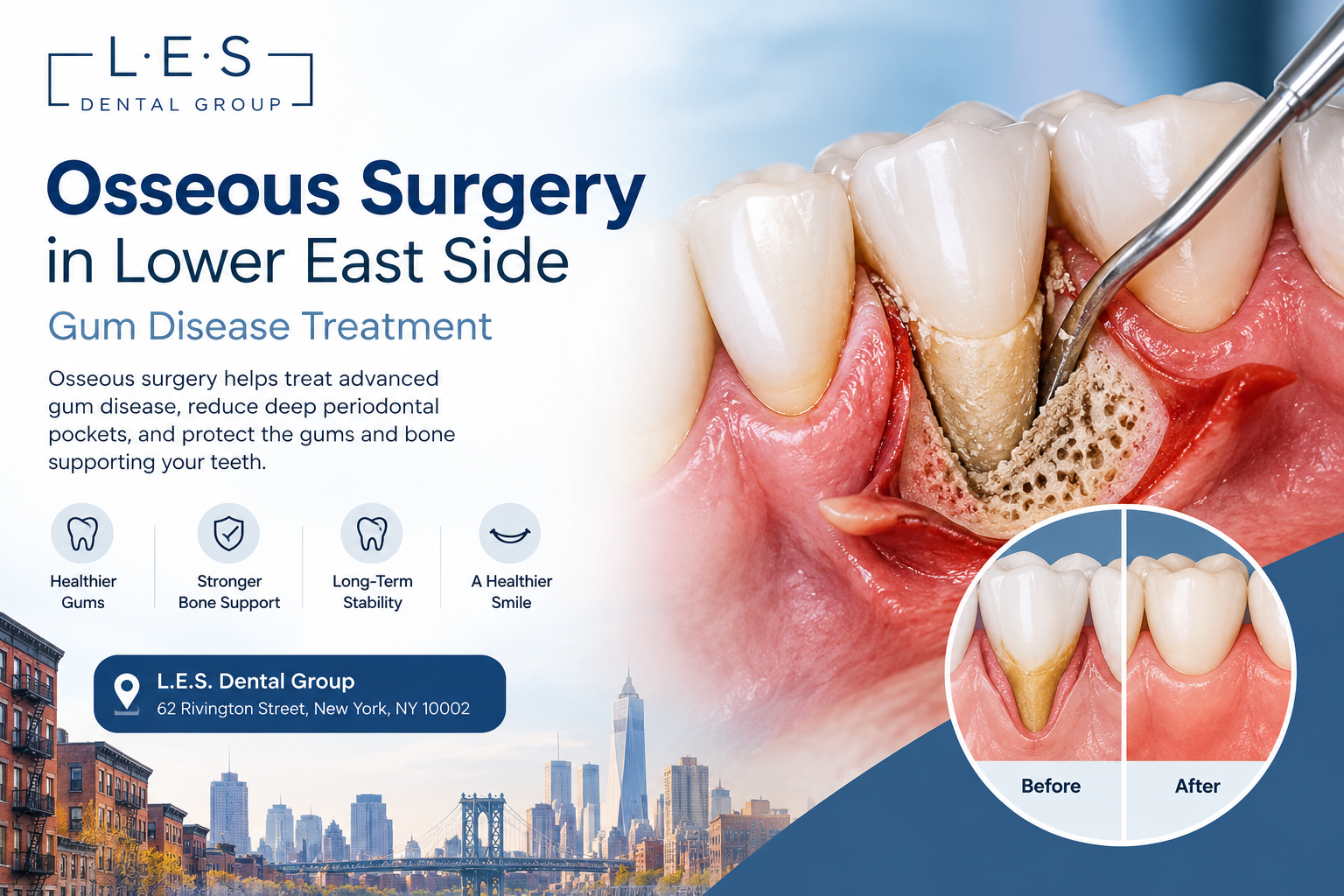
Healthy gums and the bone supporting your teeth are essential for maintaining a strong, functional smile. When periodontal disease becomes advanced, bacteria can damage the gums and supporting bone around the teeth. In some cases, non-surgical periodontal treatment may not be enough to control the disease. Osseous surgery in Lower East Side may then be recommended to access affected areas, remove disease-causing deposits, and reshape damaged or irregular bone when appropriate.
At L.E.S. Dental Group, patients in the Lower East Side can receive comprehensive periodontal care designed around their individual oral health needs. Our dental team evaluates the condition of your gums, teeth, and supporting bone before determining whether periodontal surgery is appropriate.
What Is Osseous Surgery?
Osseous surgery, sometimes called periodontal flap surgery or osseous resective surgery, is a type of periodontal treatment used to manage certain cases of advanced gum disease.
Periodontal disease can cause the gums to separate from the teeth and create deeper periodontal pockets. These pockets can make it difficult to effectively remove bacteria and plaque with routine brushing and flossing. As the condition progresses, the supporting bone around the teeth can also be damaged.
During osseous surgery, the gum tissue is carefully moved to provide access to the affected area. Disease-causing bacteria and deposits are removed, and irregular areas of damaged bone may be reshaped when necessary. The gum tissue is then positioned back around the teeth.
The American Academy of Periodontology explains that periodontal pocket procedures may involve removing bacteria and smoothing irregular damaged bone surfaces to reduce areas where bacteria can accumulate.
Why Might You Need Osseous Surgery?
Not everyone with gum disease requires surgery. In many cases, periodontal disease can initially be treated with non-surgical procedures such as scaling and root planing.
However, advanced periodontal disease may create deep pockets or areas that are difficult to clean with non-surgical treatment alone. If periodontal health does not improve sufficiently after non-surgical treatment, surgical treatment may be considered.
Your dentist or periodontal specialist may recommend an evaluation for osseous surgery if you have:
- Deep periodontal pockets
- Advanced gum disease
- Bone loss around the teeth
- Persistent gum inflammation
- Loose teeth associated with periodontal disease
- Areas that remain difficult to clean after non-surgical treatment
- Irregular bone contours caused by periodontal disease
The exact treatment depends on the severity and location of periodontal disease.
How Does Gum Disease Affect the Supporting Bone?
Periodontal disease does more than affect the visible gum tissue. As periodontitis progresses, inflammation and bacterial activity can damage the tissues and bone that support the teeth.
Gums may begin to pull away from the teeth, creating periodontal pockets where bacteria can collect. Deeper pockets can make professional and at-home cleaning more challenging. Continued destruction of supporting bone can eventually contribute to loose teeth and tooth loss.
This is why identifying and treating periodontal disease early is important.
What Happens During Osseous Surgery?
Before recommending osseous surgery in Lower East Side, your dental professional will evaluate your periodontal health. This may include examining your gums, measuring periodontal pockets, assessing tooth mobility, and taking dental X-rays when necessary.
If surgery is appropriate, the procedure generally involves several steps.
1. Local Anaesthesia
The treatment area is numbed to help keep you comfortable throughout the procedure. Your dental professional will discuss appropriate comfort options based on your individual needs.
2. Accessing the Affected Area
The gum tissue is carefully moved away from the teeth so the underlying tooth roots and supporting bone can be examined and treated.
3. Removing Bacteria and Deposits
Bacteria, plaque, calculus, and diseased tissue are removed from the affected areas. Cleaning beneath the gumline allows the dental professional to address areas that cannot be adequately reached through routine home care.
4. Reshaping Irregular Bone
When appropriate, irregular areas of damaged bone may be carefully reshaped. The goal is to create an environment that is easier to maintain with professional care and good oral hygiene.
5. Repositioning the Gum Tissue
After the affected area has been treated, the gum tissue is positioned back around the teeth and allowed to heal.
The exact surgical approach varies depending on the patient's periodontal condition and the amount and pattern of bone loss.
Osseous Surgery vs. Scaling and Root Planing
Scaling and root planing is a non-surgical periodontal treatment that removes plaque, calculus, and bacterial toxins from below the gumline and smooths tooth-root surfaces.
Many patients can achieve improved periodontal health with non-surgical treatment and ongoing maintenance. However, some advanced cases may continue to have problematic periodontal pockets despite appropriate non-surgical therapy.
In those situations, periodontal surgery may be considered to access areas that remain difficult to treat.
Your dental professional can determine which treatment is appropriate after evaluating your gums and supporting bone.
Benefits of Osseous Surgery in Lower East Side
When appropriately recommended, osseous surgery can be an important part of periodontal disease management.
Potential goals of treatment include:
- Removing bacteria from deep periodontal pockets
- Improving access to affected areas
- Reducing periodontal pocket depth
- Addressing irregular bone contours
- Supporting better periodontal health
- Making daily oral hygiene easier in treated areas
- Helping protect the teeth and their supporting structures
The objective is not simply to treat the gums temporarily. Long-term periodontal health also depends on regular professional maintenance and consistent oral hygiene at home.
What Is Recovery Like After Osseous Surgery?
Your dental professional will provide specific post-operative instructions based on your procedure. Some tenderness, swelling, or sensitivity can occur following periodontal surgery.
You may be advised to:
- Follow your prescribed oral-care instructions
- Keep the surgical area clean as directed
- Avoid irritating the treated area while it heals
- Follow any dietary recommendations provided by your dental team
- Take medications only as directed
- Attend recommended follow-up appointments
Healing time varies depending on the extent of treatment and your individual oral health.
It is important to follow your dental team's instructions carefully during recovery.
Who Is a Candidate for Osseous Surgery In Lower East Side?
Osseous surgery is not necessary for every patient with gum disease. A comprehensive periodontal evaluation is needed before treatment can be recommended.
Your dentist in Lower Manhattan may first recommend non-surgical periodontal therapy and reassess your gum health afterward. If certain periodontal pockets or areas of disease remain, surgical treatment may be considered.
Factors such as smoking, diabetes, oral hygiene, medications, and overall health can also influence periodontal treatment and healing. Tobacco use, for example, is associated with an increased risk of periodontal disease and can make periodontal treatment more difficult.
How Can You Prevent Gum Disease From Getting Worse?
Preventive care plays an important role in protecting your gums and supporting bone.
A good daily routine should include:
- Brushing your teeth twice a day
- Cleaning between your teeth every day
- Maintaining regular professional dental cleanings
- Following recommended periodontal maintenance appointments
- Avoiding tobacco products
- Seeking dental care if you notice bleeding, swelling, recession, loose teeth, or persistent bad breath
Regular periodontal evaluations can help identify gum disease before it progresses to more advanced stages.
Osseous Surgery in Lower East Side at L.E.S. Dental Group
If you have been diagnosed with advanced gum disease or have been told that you have periodontal bone loss, osseous surgery in Lower East Side may be one of the treatment options to consider.
At L.E.S. Dental Group, located at 62 Rivington Street in New York, patients can receive periodontal and comprehensive dental care in the Lower East Side. Our team can evaluate your gum health, discuss your treatment options, and develop a plan based on your individual needs.
If you are experiencing bleeding gums, gum recession, persistent bad breath, loose teeth, or other signs of periodontal disease, schedule an evaluation to determine the appropriate next step for your oral health.
Protect Your Gums and Supporting Bone
Healthy gums are an important part of a healthy smile. If periodontal disease has progressed beyond what routine cleaning can effectively manage, professional periodontal treatment may help address the underlying problem.
Contact L.E.S. Dental Group to schedule a periodontal evaluation and learn whether osseous surgery or another gum disease treatment may be appropriate for you.
Quick Links
Helpful Articles
article_category: East Village
article_category: products
article_category: psychiatry
article_category: faqs
article_category: cats
article_category: general
article_category: services
article_category: technology
article_category: dogs
article_category: restorative
article_category: vision therapy
article_category: contact lenses
article_category: health
article_category: conditions
article_category: eye surgery co-management
article_category: exotic
article_category: cosmetic
article_category: surgical procedures
article_category: aesthetics
article_category: preventative
article_category: ocular disease management
article_category: eyeglasses
article_category: eye health
article_category: large animal
[]
article_category: products
article_category: psychiatry
article_category: faqs
article_category: cats
article_category: general
article_category: services
article_category: technology
article_category: dogs
article_category: restorative
article_category: vision therapy
article_category: contact lenses
article_category: health
article_category: conditions
article_category: eye surgery co-management
article_category: exotic
article_category: cosmetic
article_category: surgical procedures
article_category: aesthetics
article_category: preventative
article_category: ocular disease management
article_category: eyeglasses
article_category: eye health
article_category: large animal
[]
Flowbite is an open-source library of interactive components built on top of Tailwind CSS including buttons, dropdowns, modals, navbars, and more.
Check out this guide to learn how to get started and start developing websites even faster with components on top of Tailwind CSS.

Keep In Touch
For non-urgent questions or to learn more about our services, contact us today!
© 2026 L.E.S. Dental Group. All rights Reserved - Accessibility Statement - Privacy Policy - Sitemap
Managed and Designed by 