
Full Arch Dental Implants in East Village NYC
Blog:Full Arch Dental Implants in East Village NYC
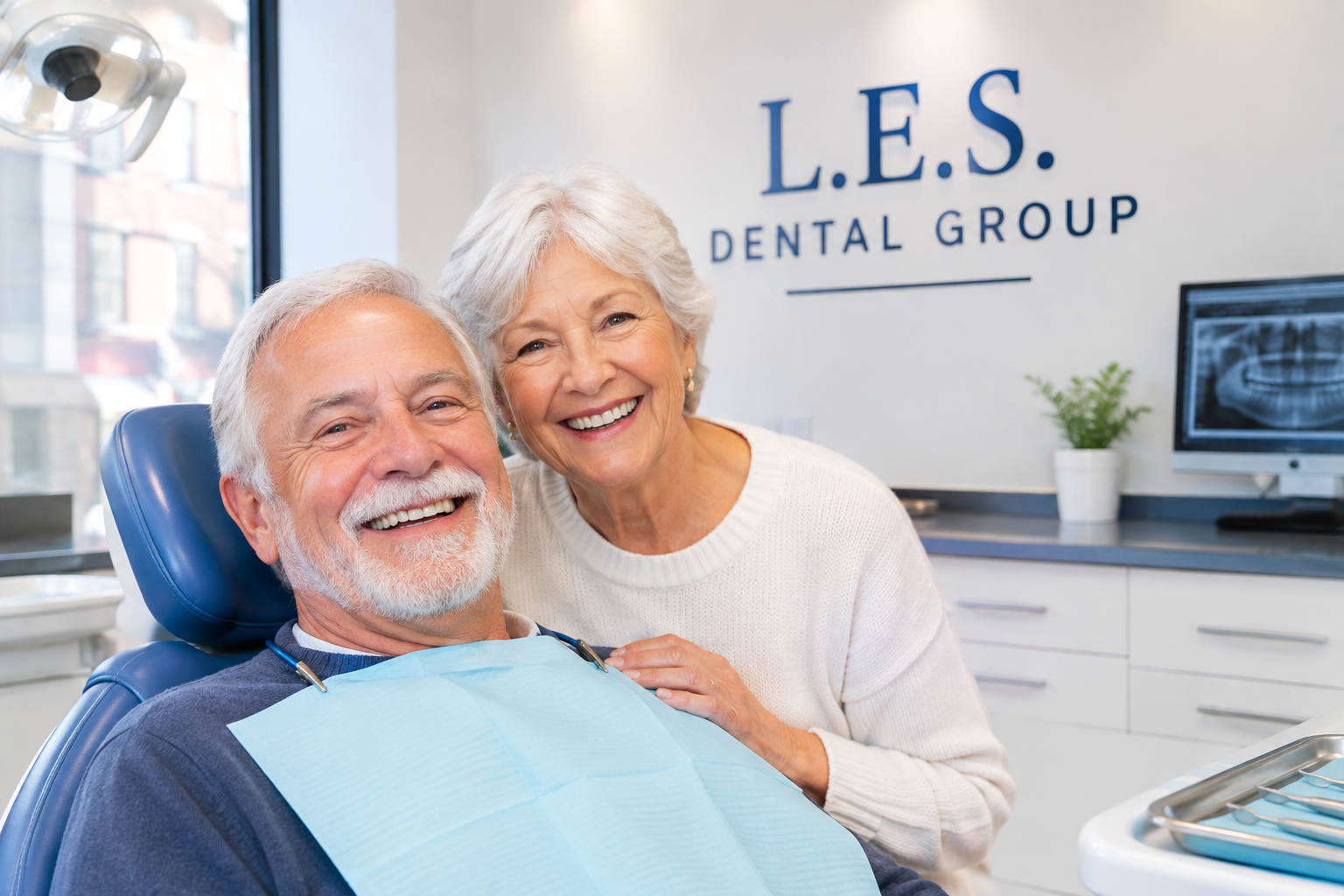
Losing most or all of your teeth can affect much more than your smile. Missing teeth can make eating and speaking more difficult, affect confidence, and contribute to changes in the jawbone over time. For patients who need to replace an entire upper or lower arch of teeth, full arch dental implants in East Village NYC can provide a stable foundation for a complete set of replacement teeth.
Full arch dental implants use multiple dental implants placed strategically in the jaw to support a fixed or removable full-arch restoration. Instead of replacing every missing tooth with an individual implant, several implants can be used to support an entire arch of replacement teeth.
At L.E.S. Dental Group, patients can discuss implant dentistry and tooth-replacement options based on their individual oral health, remaining teeth, jawbone condition, and treatment goals. The practice is located at 62 Rivington Street, New York, NY 10002, in the Lower East Side.
What Are Full Arch Dental Implants?
Full arch dental implants are a tooth-replacement solution designed for patients who are missing all or most of the teeth in one dental arch.
An arch refers to either the upper or lower set of teeth. Depending on the patient's needs, treatment may involve replacing:
- An entire upper arch
- An entire lower arch
- Both upper and lower arches
- A severely damaged or failing set of teeth
Rather than placing one implant for every missing tooth, several implants are strategically positioned in the jawbone to support a complete dental prosthesis.
Dental implants act as artificial tooth roots. They are placed into the jawbone and can eventually integrate with the surrounding bone through a process called osseointegration. Once the implants have healed and are considered suitable for restoration, they can provide support for a custom full-arch prosthesis.
Who May Need Full Arch Dental Implants?
Full arch implant treatment may be considered for patients who have lost most or all of their teeth or whose remaining teeth cannot be predictably restored.
Potential candidates may include people experiencing:
- Extensive tooth loss
- Multiple missing teeth
- Severely damaged or decayed teeth
- Advanced dental disease
- Loose or uncomfortable traditional dentures
- Difficulty chewing because of missing teeth
- Repeated dental problems affecting multiple teeth
- Teeth that may require extraction and comprehensive replacement
However, not everyone is automatically a candidate for full arch dental implants.
A comprehensive dental examination is important before treatment. The dentist may evaluate the health of your gums, remaining teeth, jawbone, bite, and overall oral condition. X-rays or other imaging may also be used to help determine whether implants can be placed safely and where they should be positioned.
The American Dental Association recommends that patients considering dental implants receive a comprehensive examination and discuss available treatment alternatives with their dentist.
Full Arch Dental Implants vs. Traditional Dentures
Traditional dentures are removable dental appliances that rest on the gums and are designed to replace missing teeth. While dentures can restore the appearance of a complete smile and help improve chewing and speech, some patients may experience movement, discomfort, or difficulty keeping their dentures stable during everyday activities.
Full arch dental implants in East Village NYC offer an alternative approach. Instead of resting directly on the gums, implant-supported restorations are secured to dental implants that are strategically placed in the jawbone. This can provide a more stable foundation for a full set of replacement teeth.
The differences between traditional dentures and full arch dental implants may include:
Improved Stability
Traditional dentures can move or shift while eating or speaking, particularly when the fit changes over time. Full arch implant restorations are anchored to dental implants, which can provide increased stability for appropriate candidates.
Improved Chewing Function
Missing teeth can make it difficult to chew certain foods comfortably. A stable implant-supported full-arch restoration can help restore chewing function and provide greater confidence when eating.
Support for the Jawbone
Dental implants are positioned within the jawbone and can provide stimulation to the surrounding bone. Following tooth loss, the jawbone may gradually lose volume because it no longer receives stimulation from natural tooth roots. Dental implants can help maintain bone in the area around the implant, although they do not prevent bone loss throughout areas without implants.
Natural-Looking Appearance
Modern full-arch restorations can be custom-designed to provide a natural-looking appearance. Factors such as tooth shape, size, colour, positioning, and the patient's gum line can be considered when designing the restoration.
Reduced Dependence on Denture Adhesives
Traditional removable dentures may require adhesive products for additional retention in some cases. Depending on the type of implant-supported restoration, full arch dental implants may provide retention without relying on conventional denture adhesives.
Long-Term Tooth Replacement Option
Full arch dental implants are designed to provide a long-term solution for patients who have lost most or all of their teeth. With proper oral hygiene, professional dental care, and regular maintenance, dental implants can remain functional for many years. The prosthetic teeth attached to the implants may require maintenance or replacement over time.
Which Option Is Right for You?
Traditional dentures and full arch dental implants are different approaches to replacing missing teeth. The right option depends on several factors, including the condition of your remaining teeth, gum health, jawbone volume, overall oral health, budget, and personal preferences.
A comprehensive dental examination is important before choosing a tooth-replacement option. Your dentist can evaluate your oral health and explain whether traditional dentures, implant-supported dentures, full arch dental implants, or another restorative treatment may be appropriate for your needs.
How Do Full Arch Dental Implants Work?
The full arch dental implant in east village nyc process involves several stages. Treatment is customized according to the patient's oral health and the type of restoration being planned.
1. Comprehensive Dental Evaluation
Treatment begins with an examination of your teeth, gums, jawbone, bite, and overall oral health.
The dentist will discuss your concerns and determine whether full arch dental implants may be appropriate for your situation.
Imaging may be used to evaluate the available bone and help plan implant placement.
2. Treatment Planning
Once your dental condition has been evaluated, a customized treatment plan can be developed.
The plan may address:
- Which teeth need to be removed
- The number and position of implants
- The condition of the jawbone
- Whether additional procedures may be required
- The type of full-arch restoration
- The expected treatment stages
- Long-term maintenance
Careful planning is particularly important for full arch implant treatment because multiple implants and a complete dental restoration need to work together.
3. Tooth Extraction When Necessary
Some patients seeking full arch dental implants still have remaining teeth.
If certain teeth are severely damaged or cannot be restored, extraction may be recommended as part of the overall treatment plan.
However, treatment decisions should be based on the condition and prognosis of each tooth. The American Dental Association notes that preserving healthy dentition should be considered when developing treatment options.
4. Dental Implant Placement
Dental implants are surgically placed into the jawbone at carefully planned locations.
The number of implants depends on the treatment design, available bone, the arch being treated, and the type of restoration being used.
For some full arch cases, an All-on-4 dental implant approach may be considered. This technique uses four strategically positioned implants to support a full-arch prosthesis in appropriate patients.
5. Healing and Osseointegration
Following implant placement, the jawbone needs time to heal around the implants.
This process is called osseointegration. During this period, the bone integrates with the implant surface, helping create a stable foundation for the future restoration.
The length of healing can vary depending on the patient's individual circumstances and treatment plan.
6. Placement of the Final Restoration
Once the implants have healed appropriately, the final full-arch restoration can be attached.
The restoration is designed to replace the missing teeth and provide a functional and natural-looking result.
Your dentist will check the fit, bite, appearance, and function of the restoration before completing treatment.
What Are All-on-4 Dental Implants?
All-on-4 dental implants are one approach to full arch tooth replacement.
The technique uses four strategically placed dental implants to support a complete arch of replacement teeth. The implant positions are planned to make effective use of the available jawbone.
For certain patients, this approach may reduce the need for additional bone-grafting procedures, although this depends on the individual's anatomy and treatment requirements.
All-on-4 is not automatically appropriate for every patient. A thorough evaluation is necessary to determine whether this approach or another full arch implant solution is more suitable.
Benefits of Full Arch Dental Implants in East Village
Full arch dental implants can provide several potential benefits for appropriately selected patients.
Improved Stability
Because the restoration is supported by dental implants, it can provide more stability than a conventional removable denture.
This may make everyday activities such as eating and speaking more comfortable for some patients.
Restores Function
Replacing missing teeth can help restore chewing function and make it easier to enjoy a wider variety of foods.
The final result depends on factors such as implant integration, restoration design, bite, and overall oral health.
Natural-Looking Smile
Full arch restorations are custom-designed to replace missing teeth. The shape, size, colour, and arrangement of the replacement teeth can be planned to create a natural-looking appearance.
Supports Oral Function
Replacing an entire arch can help restore important functions that may be affected by extensive tooth loss, including chewing and speech.
Long-Term Tooth Replacement
Dental implants are designed as a long-term tooth-replacement option. However, their longevity depends on factors including oral hygiene, regular dental care, implant health, restoration maintenance, and individual health factors.
It is important to understand that no dental treatment can guarantee a specific lifespan for every patient.
Are Full Arch Dental Implants Permanent?
Full arch dental implants are generally considered a long-term tooth-replacement option, but the term “permanent” should be understood carefully.
The dental implants themselves are intended to remain in the jaw long term when they successfully integrate and remain healthy. However, the prosthetic teeth attached to the implants can experience normal wear and may eventually require repair, adjustment, or replacement.
Good oral hygiene and regular professional dental care are important for protecting both the implants and the restoration.
Can You Get Full Arch Implants If You Have Bone Loss?
Some patients who have experienced significant tooth loss also have reduced jawbone volume.
Whether implants can be placed depends on the amount and quality of available bone and the specific treatment plan.
In some cases, additional procedures such as bone grafting may be considered. Certain implant techniques may also be designed to make use of the bone that remains.
For example, L.E.S. Dental Group's implant information describes bone grafting as one of the procedures that may be considered depending on bone density and individual needs.
A dental examination and appropriate imaging are necessary to determine whether bone augmentation or an alternative implant approach may be appropriate.
Full Arch Dental Implants Recovery
Recovery after full arch implant surgery varies from patient to patient.
Some patients may experience temporary:
- Swelling
- Tenderness
- Minor bleeding
- Bruising
- Difficulty chewing certain foods
Your dentist in east village will provide specific postoperative instructions based on your treatment.
Following those instructions carefully can help support the healing process.
During the healing period, you may need to modify your diet and avoid placing excessive pressure on the implant area. Follow-up appointments are also important so your dentist can monitor healing and implant integration.
Caring for Full Arch Dental Implants
Good long-term maintenance is essential after full arch implant treatment.
Your daily routine may include:
Brush Regularly
Brush your teeth and restoration according to your dentist's recommendations.
Clean Around the Implants
Cleaning around the implant-supported restoration is important for reducing plaque accumulation and maintaining healthy tissues.
Attend Regular Dental Visits
Routine dental examinations allow your dentist to monitor the condition of your implants, gums, and restoration.
Follow Professional Cleaning Recommendations
Your dentist or dental hygienist can recommend an appropriate professional cleaning schedule based on your oral health.
Avoid Habits That Can Damage the Restoration
Chewing very hard objects or using your teeth to open packages can place unnecessary stress on dental restorations.
How Much Do Full Arch Dental Implants Cost in East Village NYC?
The cost of full arch dental implants in East Village NYC varies significantly from patient to patient.
There is no single price that applies to every full arch implant case because treatment may involve different numbers of implants, different types of restorations, extractions, bone grafting, sedation, imaging, and other procedures.
During your consultation, the dentist can evaluate your oral health and explain the recommended treatment plan and associated costs.
If you are comparing full arch implant options, it is useful to understand exactly what is included in the proposed treatment rather than comparing prices alone.
Full Arch Dental Implants vs. Individual Dental Implants
Dental implants can be used to replace a single missing tooth, several missing teeth, or an entire arch of teeth. The appropriate implant treatment depends on the extent of tooth loss, the condition of the remaining teeth, jawbone health, and the patient's overall oral health and treatment goals.
Individual dental implants are typically used when one or several teeth are missing. Each implant is placed into the jawbone to replace the root of a missing tooth and can support an individual dental crown. When multiple teeth are missing, several individual implants may be used to support separate crowns or a dental bridge.
Full arch dental implants in East Village NYC, on the other hand, are designed for patients who are missing most or all of the teeth in an upper or lower dental arch. Rather than placing a separate implant for every missing tooth, multiple strategically positioned implants can support a full-arch dental restoration.
Replacing a Single Missing Tooth
When only one tooth is missing, a single dental implant and crown may provide a suitable replacement option for an appropriate candidate. The implant replaces the missing tooth root, while the custom dental crown restores the visible portion of the tooth.
This approach can restore the appearance and function of the missing tooth without requiring the neighbouring teeth to support the restoration.
Replacing Several Missing Teeth
Patients who have several missing teeth may have different implant options available. Individual implants can support separate crowns, while strategically placed implants may also support an implant-supported bridge.
The most appropriate approach depends on the location and number of missing teeth, available jawbone, bite, gum health, and the desired final restoration.
Replacing an Entire Dental Arch
When most or all teeth in an upper or lower arch are missing, a full arch implant-supported restoration may be considered.
Instead of replacing every missing tooth with an individual implant, several implants are strategically placed within the jawbone to support a complete set of replacement teeth. In appropriate cases, techniques such as All-on-4 dental implants may be used to support a full arch with four strategically positioned implants.
How Do You Know Which Implant Option Is Right for You?
There is no single implant solution that is appropriate for every patient. Your dentist will consider several factors when developing an individual treatment plan, including:
- Number and location of missing teeth
- Condition of the remaining teeth
- Gum and periodontal health
- Jawbone volume and density
- Bite and jaw relationship
- Overall oral health
- Type of restoration required
- Long-term treatment goals
A comprehensive dental examination and appropriate imaging can help determine whether individual dental implants, an implant-supported bridge, implant-supported dentures, or full arch dental implants in East Village NYC may be appropriate for your needs.
Discussing your options with a qualified dental professional can help you understand the advantages, limitations, treatment process, and maintenance requirements of each approach before deciding on a tooth-replacement solution.
Why Choose L.E.S. Dental Group for Full Arch Dental Implants in East Village NYC?
L.E.S. Dental Group provides implant dentistry as part of its restorative dental services and is located at 62 Rivington Street, New York, NY 10002. The practice states that it has been located in the Lower East Side for nearly four decades and provides family, preventive, cosmetic, restorative, and implant dentistry.
The practice's implant information describes a treatment process involving consultation and evaluation, implant placement, healing and osseointegration, abutment placement, and restoration.
Patients considering full arch dental implants can discuss their dental concerns, available treatment options, and whether implant-supported tooth replacement is appropriate for their individual needs.
Frequently Asked Questions About Full Arch Dental Implants
How many implants are needed for a full arch?
The number of implants required depends on the treatment design, available bone, the patient's anatomy, and the type of full-arch restoration being used. Some techniques, such as All-on-4, use four strategically placed implants to support an arch in appropriately selected patients.
Are full arch dental implants better than dentures?
Full arch dental implants and traditional dentures are different treatment options. Implant-supported restorations are anchored to dental implants, while traditional dentures rest on the gums and are removable. The appropriate option depends on your oral health, bone condition, preferences, and treatment goals.
Can full arch implants replace all my teeth?
Full arch implant treatment is specifically designed to replace an entire upper or lower arch of missing teeth. Whether it is appropriate for you depends on a comprehensive dental evaluation.
How long do full arch dental implants last?
Dental implants can provide long-term tooth replacement when they successfully integrate and are properly maintained. However, implant and restoration longevity varies between patients, and the prosthetic teeth may eventually require maintenance or replacement.
Can I get full arch implants if I still have some teeth?
Possibly. Patients with severely damaged or failing teeth may be candidates for a full arch treatment plan, but each remaining tooth should be evaluated individually before deciding whether extraction and replacement are appropriate.
Do full arch dental implants look natural?
A custom-designed full arch restoration can be made to resemble natural teeth. The final appearance depends on the restoration design, tooth shape, colour, positioning, gum contours, and individual facial characteristics.
Schedule a Full Arch Dental Implant Consultation in East Village NYC
If you are missing most or all of your teeth, struggling with loose dentures, or dealing with multiple damaged teeth, full arch dental implants in East Village NYC may be an option worth discussing with a dental professional.
A comprehensive consultation can help determine whether full arch implants, All-on-4 implants, implant-supported dentures, traditional dentures, or another restorative option is appropriate for your needs.
Discuss your options with a qualified dental professional at L.E.S Dental Group to understand the potential benefits, risks, treatment stages, alternatives, and expected maintenance before beginning treatment.
Quick Links
Helpful Articles
article_category: East Village
article_category: products
article_category: psychiatry
article_category: faqs
article_category: cats
article_category: general
article_category: services
article_category: technology
article_category: dogs
article_category: restorative
article_category: vision therapy
article_category: contact lenses
article_category: health
article_category: conditions
article_category: eye surgery co-management
article_category: exotic
article_category: cosmetic
article_category: surgical procedures
article_category: aesthetics
article_category: preventative
article_category: ocular disease management
article_category: eyeglasses
article_category: eye health
article_category: large animal
[]
article_category: products
article_category: psychiatry
article_category: faqs
article_category: cats
article_category: general
article_category: services
article_category: technology
article_category: dogs
article_category: restorative
article_category: vision therapy
article_category: contact lenses
article_category: health
article_category: conditions
article_category: eye surgery co-management
article_category: exotic
article_category: cosmetic
article_category: surgical procedures
article_category: aesthetics
article_category: preventative
article_category: ocular disease management
article_category: eyeglasses
article_category: eye health
article_category: large animal
[]
Flowbite is an open-source library of interactive components built on top of Tailwind CSS including buttons, dropdowns, modals, navbars, and more.
Check out this guide to learn how to get started and start developing websites even faster with components on top of Tailwind CSS.

Keep In Touch
For non-urgent questions or to learn more about our services, contact us today!
© 2026 L.E.S. Dental Group. All rights Reserved - Accessibility Statement - Privacy Policy - Sitemap
Managed and Designed by 