
Dentures in East Village NYC | Full & Partial Dentures
Blog:Dentures in East Village NYC | Full & Partial Dentures
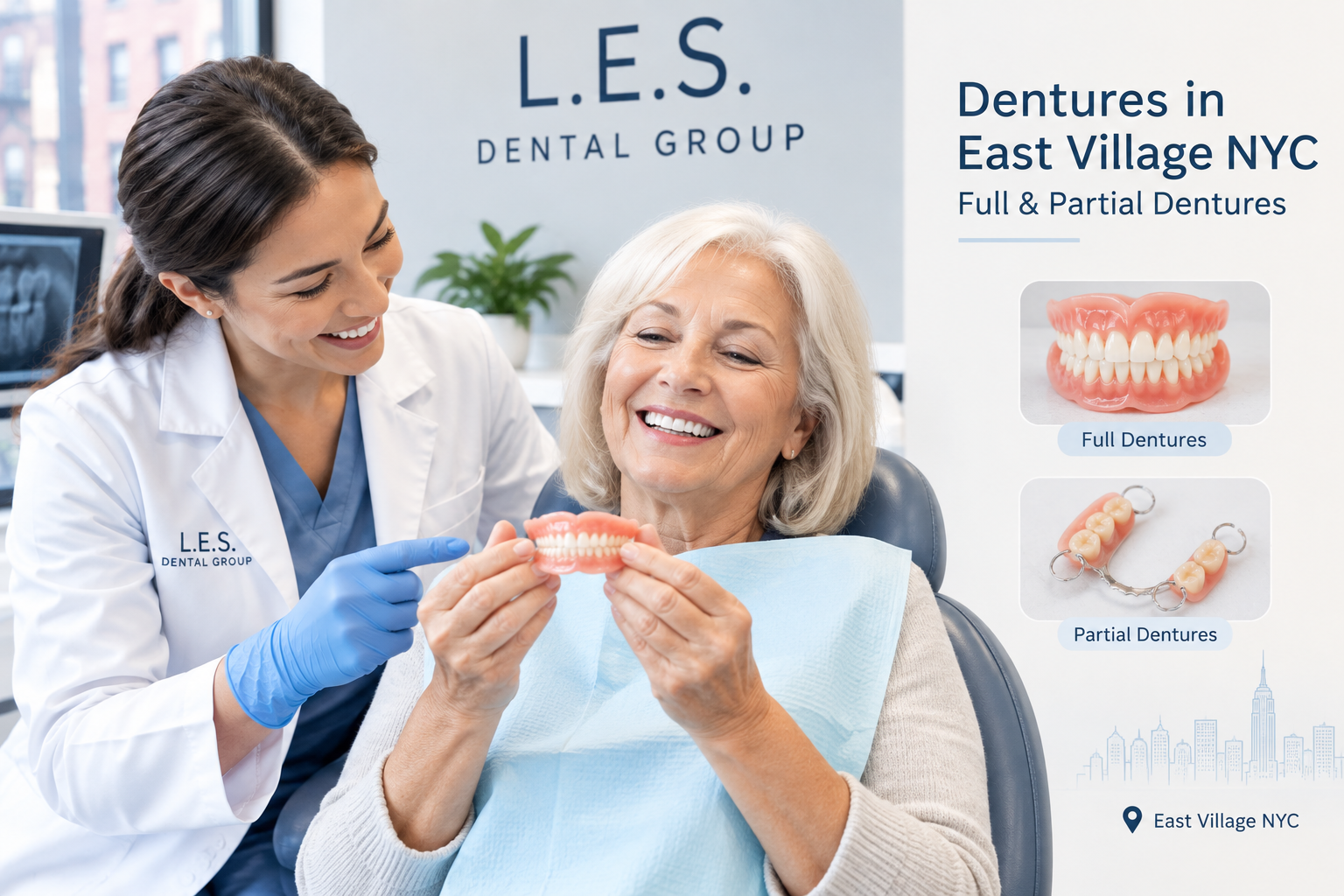
Missing teeth can affect more than your smile. They can make chewing difficult, affect the way you speak, and change how your remaining teeth and jaw function. Dentures in East Village can provide a practical option for replacing multiple missing teeth and restoring everyday oral function.
At L.E.S. Dental Group, patients in East Village and surrounding Lower Manhattan neighbourhoods can receive comprehensive dental care based on their individual needs. If you have lost several teeth or are looking for an alternative to other tooth replacement options, a dental consultation can help determine whether dentures are suitable for you.
What Are Dentures?
Dentures are removable dental appliances designed to replace missing teeth and the surrounding oral structures. They are custom-made to fit your mouth and can be designed to restore both function and appearance.
Depending on how many teeth you are missing, your dentist may recommend different types of dentures. The two main categories are complete dentures and partial dentures.
Complete dentures are designed to replace an entire arch of missing teeth.
Partial dentures are used when some natural teeth remain. They can fill gaps while working alongside your remaining teeth.
Modern dentures are designed to look natural and provide a comfortable fit when properly planned and adjusted.
Who May Need Dentures?
Dentures may be an option for people who have lost teeth because of several different causes, including:
- Extensive tooth decay
- Advanced gum disease
- Dental trauma
- Tooth fractures
- Age-related tooth loss
- Teeth that cannot be restored
- Multiple missing teeth
- Not everyone with missing teeth will need dentures. Your dentist will assess your remaining teeth, gums, jawbone, bite, and overall oral health before recommending a treatment.
Types of Dentures
When replacing missing teeth, there is no single denture option that works for every patient. The right type of denture depends on how many teeth are missing, the condition of your remaining teeth and gums, your bite, jaw structure, and your overall dental needs.
If you are considering dentures in East Village, your dentist can examine your mouth and discuss the available options. Dentures may be used to replace a complete arch of missing teeth, several missing teeth, or teeth that cannot be restored.
The three common types include full dentures, partial dentures, and implant-supported dentures.
Full Dentures East Village
Full dentures, also known as complete dentures, are designed to replace all of the teeth in the upper jaw, lower jaw, or both. They may be recommended when most or all of the natural teeth in an arch are missing or cannot be successfully restored.
A complete denture consists of a set of artificial teeth attached to a gum-coloured base. The base is designed to sit over the gums and provide support for the replacement teeth.
Full dentures can help restore several everyday functions affected by extensive tooth loss, including chewing and speaking. They can also help fill out the appearance of the lips and cheeks when tooth loss has reduced natural support.
For patients looking for full dentures in East Village, the treatment process generally begins with a dental examination. Your dentist will assess the condition of your gums, jaw, and any remaining teeth before determining whether complete dentures are appropriate.
The denture is custom-made using measurements or impressions of your mouth. This allows the appliance to be designed according to your individual oral anatomy.
It can take some time to become comfortable wearing a new set of dentures. During this adjustment period, you may need to practise speaking and start with softer foods before gradually returning to a wider range of foods.
Regular dental appointments are also important. Changes in the gums and jawbone can affect how a denture fits over time, so your dentist may recommend adjustments, relining, or replacement when necessary.
Partial Dentures
Partial dentures are designed for patients who have some natural teeth remaining but have one or more gaps caused by missing teeth.
Instead of replacing an entire arch, a partial denture fills selected spaces and is designed to work alongside your remaining natural teeth.
A partial denture typically includes replacement teeth attached to a gum-coloured base. Depending on the design, it may use clasps or other components to help provide support and stability.
Partial dentures can help restore some chewing function while also filling visible spaces in your smile. Replacing missing teeth may also help prevent the remaining teeth from shifting into the empty spaces.
If you are considering partial dentures in East Village, your dentist will examine your remaining teeth and gums before recommending a design. The condition and position of your natural teeth are important factors when planning a partial denture.
Your dentist may also recommend treating existing dental problems before the denture is made. Addressing cavities, gum disease, or other oral health concerns can help create a healthier foundation for your replacement teeth.
Like other removable dentures, partial dentures require regular cleaning and maintenance. Your dentist can explain how to remove, clean, and store the appliance and how to maintain the health of your remaining natural teeth.
Implant-Supported Dentures East Village
Implant-supported dentures are another option for replacing multiple missing teeth. Unlike conventional removable dentures that rely primarily on the gums for support, implant-supported dentures are connected to dental implants placed in the jaw.
Dental implants act as anchors for the denture. Depending on the treatment design, the denture may be removable for cleaning or designed with a different attachment system.
Because the denture receives support from implants, this approach can provide additional stability compared with conventional dentures. This may be particularly useful for patients who have difficulty keeping a traditional denture securely in place.
Implant-supported dentures can be used to replace multiple missing teeth without necessarily requiring an individual implant for every missing tooth. However, not every patient is automatically a candidate for this type of treatment.
When considering implant-supported dentures in East Village, your dentist will evaluate factors such as your jawbone, gum health, remaining teeth, number of missing teeth, and overall oral health. Your treatment goals and ability to maintain good oral hygiene are also important considerations.
In some cases, additional procedures may be recommended before implants can be placed. Your dentist can explain the treatment process, expected timeline, and available alternatives following a comprehensive examination.
Which Type of Denture Is Right for You?
The best denture option depends on your individual dental needs. Someone who has lost all the teeth in an arch may require full dentures, while a patient with several missing teeth and healthy remaining teeth may be a candidate for partial dentures.
For patients seeking additional stability, implant-supported dentures may be another treatment option to discuss.
During a consultation for dentures in East Village, your dentist can evaluate your oral health and explain the advantages, limitations, maintenance requirements, and expected treatment process for each suitable option.
A personalised evaluation is important because factors such as bone structure, gum health, remaining teeth, bite, and the location of missing teeth can all influence the recommended treatment.
Whether you need full dentures, partial dentures, or are interested in implant-supported dentures, L.E.S. Dental Group can help you understand your available tooth replacement options and determine the next appropriate step for your smile.
Benefits of Dentures
Missing teeth can affect more than the appearance of your smile. Tooth loss may make it harder to chew certain foods, influence the way you speak, and change the support provided by your lips and cheeks. For many patients, dentures can provide a practical way to replace missing teeth and restore important aspects of everyday oral function.
Depending on the type of denture and your individual dental needs, dentures in East Village may offer several functional, aesthetic, and lifestyle benefits.
Improved Chewing and Eating
One of the most noticeable effects of missing teeth can be difficulty chewing food. Gaps in the smile can make it harder to break down certain foods, particularly foods that require more chewing.
Dentures replace missing teeth with artificial teeth designed to help restore chewing function. With properly fitted dentures, many patients can enjoy a wider variety of foods more comfortably.
However, adjusting to a new denture can take some time. Your dentist may recommend starting with softer foods and gradually introducing foods that require more chewing as you become comfortable with your dentures.
Support for Speech
Teeth, gums, tongue, lips, and other structures in the mouth work together to produce clear speech. When several teeth are missing, the changes in the spaces inside the mouth can affect the way certain sounds are produced.
Dentures can fill these spaces and provide replacement teeth that may help improve speech affected by tooth loss. Some patients may notice temporary changes in pronunciation when they first begin wearing dentures.
With regular use and practice, many people become more accustomed to speaking with their new dentures. If certain sounds remain difficult, your dentist can assess the fit of the denture and determine whether an adjustment may be needed.
A More Complete-Looking Smile
Missing teeth can create visible gaps and may change the overall appearance of your smile. Dentures are designed to replace missing teeth and can provide a more complete-looking smile.
Modern dentures are available in different shapes, sizes, and shades. During the treatment process, your dentist can consider factors such as your facial appearance, remaining teeth, and natural smile when planning the replacement teeth.
For patients looking into dentures in East Village, discussing your aesthetic preferences with your dentist can help ensure that the final denture is designed with both appearance and function in mind.
Support for Facial Appearance
Your teeth provide support for the lips and cheeks. When multiple teeth are lost, the surrounding facial structures may have less support, which can contribute to changes in facial appearance.
Dentures can replace some of the structure that was previously provided by natural teeth. Properly designed dentures may help provide support for the lips and cheeks while restoring the appearance of the lower face.
The amount of support provided depends on factors such as the number of missing teeth, the condition of the jawbone, and the design and fit of the denture.
Restoring Everyday Confidence
Tooth loss can sometimes make people feel self-conscious about smiling, speaking, or eating around others. Replacing missing teeth may help patients feel more comfortable in everyday social situations.
A properly fitted denture can provide replacement teeth while helping create a more natural-looking smile. For some patients, restoring their smile can make it easier to participate in conversations, social events, and other daily activities without focusing as much on missing teeth.
Removable and Convenient
Traditional full and partial dentures are removable, which allows patients to take them out for cleaning and maintenance. Removability can also make it easier to maintain good oral hygiene around the denture and any remaining natural teeth.
Your dentist will provide specific instructions for cleaning, storing, and caring for your dentures. Following these instructions can help maintain the condition of the denture and support good oral hygiene.
Patients should also continue caring for their gums, tongue, and any remaining natural teeth. Regular dental visits remain important even when you wear dentures because your dentist can check your oral tissues, assess the fit of the denture, and identify any areas that may require attention.
May Help Prevent Some Teeth From Shifting
For patients with remaining natural teeth, replacing missing teeth may also help maintain the existing arrangement of the teeth. When a tooth is lost, neighbouring teeth can sometimes move into the open space.
A partial denture can replace missing teeth while fitting around the remaining natural teeth. Your dentist will assess your bite and tooth position to determine whether a partial denture is appropriate for your situation.
A Customised Tooth Replacement Option
Dentures are not a one-size-fits-all treatment. They can be designed according to the number of missing teeth, the condition of the remaining teeth, your gum health, jaw structure, bite, and individual treatment goals.
Some patients may benefit from traditional full or partial dentures, while others may be candidates for implant-supported dentures that provide additional stability.
If you are considering dentures in East Village, a dental evaluation can help determine which type of denture may be appropriate for your needs.
Take the Next Step Towards Replacing Missing Teeth
Dentures can help address several effects of tooth loss, from difficulty chewing and speaking to visible gaps in the smile. The right treatment depends on your individual oral health and the extent of your tooth loss.
L.E.S. Dental Group can evaluate your smile, discuss your tooth replacement options, and explain what you can expect from the denture process. A consultation can help you understand whether full dentures, partial dentures, or another tooth replacement option is suitable for you.
What Is the Process for Getting Dentures?
Getting dentures usually begins with a comprehensive dental examination. Your dentist will assess your oral health and discuss your concerns and treatment goals.
If dentures are appropriate, the process may include several stages.
1. Dental Examination
Your dentist evaluates your gums, remaining teeth, jaw, bite, and overall oral health. Any existing dental problems may need to be addressed before your denture is made.
2. Treatment Planning
Your dentist will discuss the available tooth replacement options with you. This may include full dentures, partial dentures, or implant-supported solutions depending on your individual circumstances.
3. Dental Impressions or Digital Scans
Measurements, impressions, or digital scans of your mouth may be taken. These help create a denture designed to fit your individual oral anatomy.
4. Denture Design and Fabrication
The denture is created based on the measurements and information collected during your appointments. The size, shape, and appearance of the replacement teeth are considered as part of the design.
5. Fitting the Denture
Once the denture is ready, your dentist checks how it fits and functions. Adjustments may be necessary to improve comfort, stability, and the way your teeth come together.
6. Follow-Up and Adjustments
It can take time to become accustomed to a new denture. Follow-up appointments allow your dentist to check the fit and make adjustments if necessary.
Are Dentures Comfortable?
Modern dentures are custom-made for the individual patient, but it can take some time for your mouth to adjust to a new appliance.
You may initially notice that the denture feels unfamiliar. Some patients may also experience minor areas of irritation while becoming accustomed to the appliance.
If your denture feels painful, loose, or causes persistent irritation, contact your dentist in East Village At LES Dental Group . Adjustments may improve the fit and comfort.
It is important not to try to modify the denture yourself. Professional adjustments can help protect your gums and ensure the appliance functions properly.
How Do You Care for Dentures?
Proper denture care can help maintain the appliance and support good oral hygiene.
Your dentist may recommend:
- Cleaning your dentures regularly
- Removing removable dentures as instructed
- Cleaning your gums and tongue
- Handling dentures carefully when removing or inserting them
- Storing dentures appropriately when they are not being worn
- Attending regular dental examinations
- Following your dentist's specific cleaning instructions
If you still have natural teeth, they also require regular brushing, flossing, and professional dental care.
How Long Do Dentures Last?
The lifespan of dentures varies between patients. Normal wear, changes in your mouth, and the way the denture is used can affect how long it remains comfortable and functional.
Over time, your gums and jawbone can naturally change shape following tooth loss. As a result, a denture that once fitted well may eventually become loose or uncomfortable.
Regular dental visits allow your dentist to evaluate your denture and oral health and determine whether an adjustment, relining, repair, or replacement may be appropriate.
Dentures vs. Dental Implants in East Village
Dentures and dental implants are different approaches to replacing missing teeth.
Traditional dentures are removable and can replace multiple missing teeth without placing implants in the jaw.
Dental implants are placed into the jawbone and can support individual replacement teeth, bridges, or implant-supported dentures.
The appropriate option depends on factors such as the number of missing teeth, bone availability, oral health, budget, lifestyle, and treatment preferences.
A dental consultation can help you understand the differences between these options and determine which treatments may be suitable for your circumstances.
Can You Eat Normally With Dentures?
Dentures are designed to help restore chewing function, but eating with a new denture can require an adjustment period.
Your dentist may recommend starting with softer foods and gradually introducing foods that require more chewing. Cutting food into smaller pieces and chewing evenly on both sides can also make the transition easier.
Certain very hard, sticky, or chewy foods may be more difficult to eat with removable dentures.
As you become accustomed to your dentures, your ability to eat a wider range of foods may improve.
Why Choose L.E.S. Dental Group for Dentures in East Village?
If you are searching for dentures in East Village, L.E.S. Dental Group provides comprehensive dental care for patients experiencing tooth loss and other oral health concerns.
Our dental team can evaluate your current oral health, discuss your tooth replacement needs, and explain available options. Treatment recommendations are based on the condition of your teeth and gums, the number of missing teeth, your bite, and your individual goals.
Located in Lower Manhattan, L.E.S. Dental Group serves patients from East Village, Lower East Side, and surrounding New York City neighbourhoods.
Restore Your Smile With Dentures in East Village
Living with missing teeth can affect everyday activities such as eating, speaking, and smiling. Dentures may provide an effective way to replace multiple missing teeth and restore important aspects of oral function.
If you are considering dentures in East Village NYC, schedule a consultation with L.E.S. Dental Group. Your dentist can evaluate your oral health and discuss whether full dentures, partial dentures, implant-supported dentures, or another tooth replacement option may be appropriate for you.
Take the next step towards restoring your smile and improving your everyday dental function with personalised denture care in East Village.
Quick Links
Helpful Articles
article_category: East Village
article_category: products
article_category: psychiatry
article_category: faqs
article_category: cats
article_category: general
article_category: services
article_category: technology
article_category: dogs
article_category: restorative
article_category: vision therapy
article_category: contact lenses
article_category: health
article_category: conditions
article_category: eye surgery co-management
article_category: exotic
article_category: cosmetic
article_category: surgical procedures
article_category: aesthetics
article_category: preventative
article_category: ocular disease management
article_category: eyeglasses
article_category: eye health
article_category: large animal
[]
article_category: products
article_category: psychiatry
article_category: faqs
article_category: cats
article_category: general
article_category: services
article_category: technology
article_category: dogs
article_category: restorative
article_category: vision therapy
article_category: contact lenses
article_category: health
article_category: conditions
article_category: eye surgery co-management
article_category: exotic
article_category: cosmetic
article_category: surgical procedures
article_category: aesthetics
article_category: preventative
article_category: ocular disease management
article_category: eyeglasses
article_category: eye health
article_category: large animal
[]
Flowbite is an open-source library of interactive components built on top of Tailwind CSS including buttons, dropdowns, modals, navbars, and more.
Check out this guide to learn how to get started and start developing websites even faster with components on top of Tailwind CSS.

Keep In Touch
For non-urgent questions or to learn more about our services, contact us today!
© 2026 L.E.S. Dental Group. All rights Reserved - Accessibility Statement - Privacy Policy - Sitemap
Managed and Designed by 