
Dental Bridges in East Village NYC | Tooth Replacement
Blog:Dental Bridges in East Village NYC | Tooth Replacement
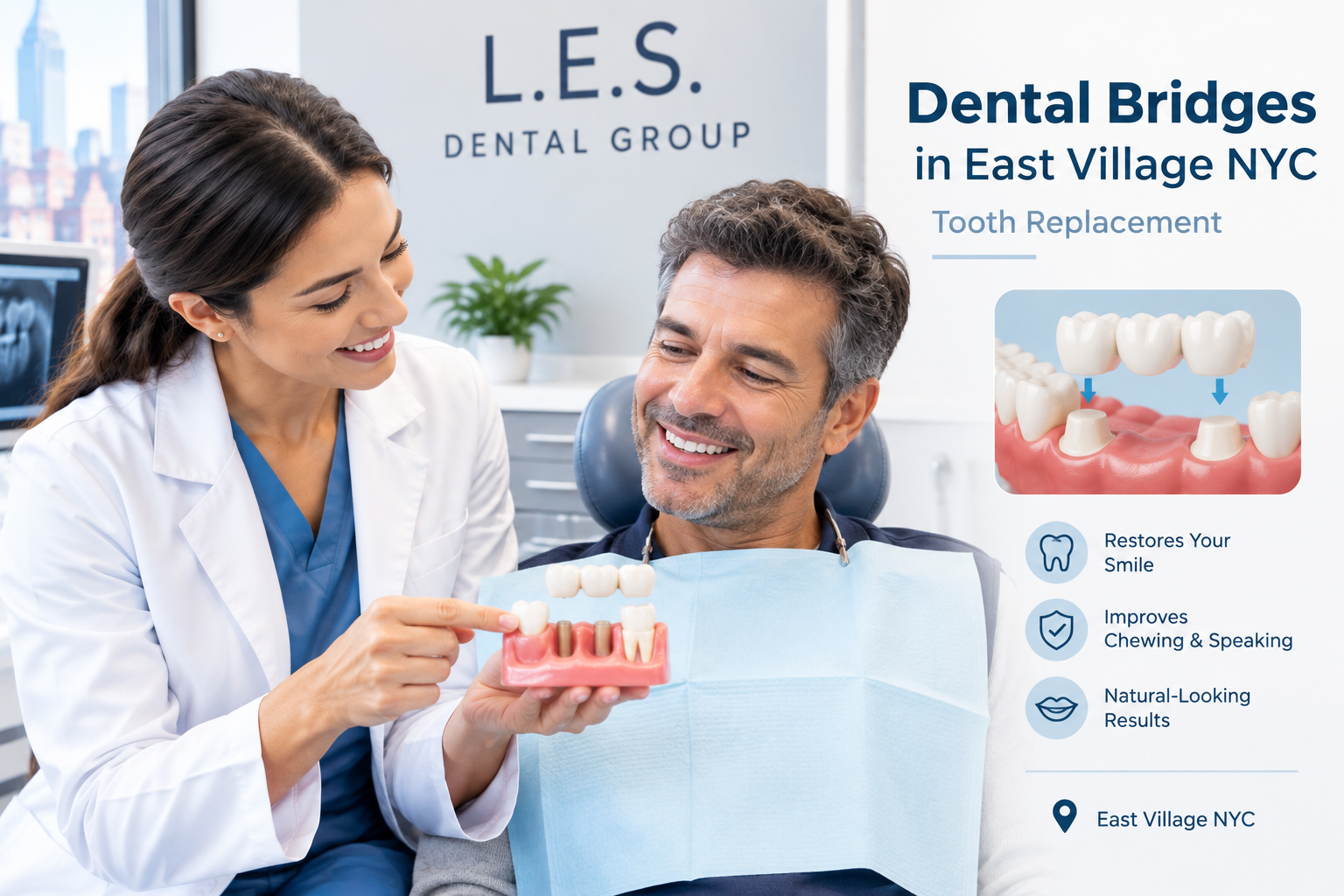
Missing teeth can affect much more than the appearance of your smile. A gap caused by tooth loss may make chewing more difficult, affect speech, and allow neighbouring teeth to shift over time. A dental bridge is one treatment option that can replace one or more missing teeth and help restore the function and appearance of your smile.
If you are considering dental bridges in East Village, L.E.S. Dental Group can evaluate your oral health and discuss whether a bridge may be appropriate for your needs.
What Is a Dental Bridge?
A dental bridge is a dental restoration designed to replace one or more missing teeth. It fills the space created by tooth loss with an artificial tooth, known as a pontic. Depending on the type of bridge, the artificial tooth may be supported by neighbouring natural teeth or dental implants.
Unlike a removable partial denture, a conventional fixed bridge is attached in place and is not intended to be removed by the patient. The design and materials used depend on the location of the missing tooth, the condition of the surrounding teeth, your bite, and your individual treatment needs.
Why Might You Need a Dental Bridge?
A missing tooth can create functional and cosmetic concerns. Depending on its location, tooth loss may affect the way you chew or speak. The remaining teeth can also move into the space created by a missing tooth.
A dental bridge may be considered when you want to:
- Replace one or more missing teeth
- Fill a visible gap in your smile
- Improve chewing function
- Support speech affected by tooth loss
- Restore a more complete-looking smile
- Help maintain the position of remaining teeth
Your dentist in east village will first evaluate the condition of your teeth and gums to determine whether a bridge is a suitable option.
Types of Dental Bridges in East Village
Dental bridges are available in several designs, and each type is intended for different tooth replacement situations. The right option depends on the number and location of missing teeth, the condition of the surrounding teeth, your bite, gum health, and your overall oral health.
If you are considering dental bridges in East Village, your dentist can examine the missing-tooth area and explain which type of bridge may be suitable for your individual needs. Understanding the differences between traditional, cantilever, Maryland, and implant-supported bridges can help you have a more informed discussion about your treatment options.
Traditional Dental Bridges
Traditional dental bridges are one of the most commonly used types of fixed bridges. They are typically used when a missing tooth is located between two healthy teeth that can provide support for the restoration.
A traditional bridge usually consists of an artificial tooth, known as a pontic, connected to dental crowns on either side. The crowns are placed over the neighbouring teeth, which are prepared to support the bridge.
How Traditional Bridges Work
The supporting teeth are carefully prepared so that the crowns can fit securely over them. The artificial replacement tooth sits in the space created by the missing tooth.
Once the bridge has been made, your dentist checks its fit, appearance, and bite before permanently securing it.
Who May Benefit From a Traditional Bridge?
A traditional bridge may be considered when:
- One or more teeth are missing
- Healthy teeth are present on both sides of the gap
- The supporting teeth are strong enough to support the restoration
- The patient wants a fixed tooth replacement option
- The gums and surrounding oral tissues are healthy enough for treatment
Because the neighbouring teeth provide support, their condition is an important part of the treatment assessment.
Cantilever Dental Bridges
A cantilever dental bridge differs from a traditional bridge because it is supported from only one side of the missing-tooth space.
Instead of having supporting teeth on both sides, the artificial tooth is attached to a crown or supporting structure on one side of the gap.
This type of bridge may be considered in specific situations where there is only one suitable supporting tooth. However, it is not appropriate for every location in the mouth.
When May a Cantilever Bridge Be Considered?
Your dentist will consider several factors before recommending a cantilever bridge, including:
- The location of the missing tooth
- The condition of the supporting tooth
- Your bite
- The amount of pressure placed on the restoration
- The number of teeth being replaced
- Your overall oral health
Because a cantilever bridge receives support from only one side, the forces placed on the restoration need to be carefully considered.
Your dentist can determine whether this design is appropriate after examining your teeth and bite.
Maryland Dental Bridges
A Maryland dental bridge in East Village, also known as a resin-bonded bridge, uses a different method of support. Instead of placing full crowns over the neighbouring teeth, the replacement tooth is attached to a framework or wings that are bonded to the back surfaces of nearby teeth.
One potential advantage of this design is that the supporting teeth generally require less preparation than they would for a traditional bridge.
Maryland bridges may be considered in certain situations, particularly when replacing some missing front teeth. However, the suitability of this option depends on factors such as your bite, the location of the missing tooth, and the condition of the supporting teeth.
How Does a Maryland Bridge Work?
The replacement tooth is connected to a framework that extends behind the neighbouring teeth. The framework is bonded to the supporting teeth to hold the restoration in position.
Because this type of bridge relies on bonding rather than full crowns, your dentist will carefully assess whether the supporting teeth and your bite are suitable.
Implant-Supported Bridges East Village
Implant-supported bridges are different from traditional bridges because they use dental implants for support rather than relying entirely on neighbouring natural teeth.
Dental implants are placed into the jawbone and act as artificial tooth roots. Once the implants have integrated with the surrounding bone and the treatment is ready for restoration, they can provide support for a bridge replacing multiple missing teeth.
This option may be considered when several adjacent teeth are missing and a patient wants a fixed tooth replacement solution that does not depend on preparing healthy neighbouring teeth.
How Implant-Supported Bridges Work
The treatment begins with a detailed evaluation of your oral health and jawbone. Your dentist will determine whether there is sufficient bone and whether your gums and remaining teeth are healthy enough for implant treatment.
If implants are appropriate, they are surgically placed into the jawbone. After the appropriate healing period, the dental restoration can be attached to the implants.
The exact treatment timeline varies depending on the number of implants, the condition of the jawbone, the need for additional procedures, and the type of restoration being planned.
Who May Be a Candidate for an Implant-Supported Bridge?
An implant-supported bridge may be considered for patients who:
- Have multiple adjacent missing teeth
- Have suitable jawbone structure or can undergo appropriate bone treatment
- Have healthy gums or are able to address existing gum disease
- Want a more stable fixed replacement option
- Have an oral health condition suitable for implant treatment
Not everyone is automatically a candidate for dental implants. A comprehensive dental examination is necessary before treatment is recommended.
Which Type of Dental Bridge Is Right for You?
There is no single type of dental bridge that is suitable for every patient. The best option depends on your specific dental circumstances.
During a consultation for dental bridges in East Village, your dentist may evaluate:
- The number of missing teeth
- The location of the missing teeth
- The health of neighbouring teeth
- Gum health
- Jawbone condition
- Your bite and chewing forces
- Your oral hygiene
- Your cosmetic goals
- Your preference for fixed or removable treatment
- Your overall dental health
For example, a traditional bridge may be considered when strong teeth are available on both sides of a gap. A Maryland bridge may be suitable in selected cases where minimal preparation is preferred. An implant-supported bridge may be considered when several adjacent teeth are missing and dental implants are appropriate.
Your dentist can explain the benefits, limitations, treatment requirements, and expected maintenance of each option before you make a decision.
What Are the Benefits of Dental Bridges?
Choosing a dental bridge may provide several benefits depending on your individual circumstances.
Restores Missing Teeth
A bridge fills the space created by one or more missing teeth. The replacement teeth are designed to restore a more complete smile and can help improve everyday oral function.
Improves Chewing
Missing teeth can make it difficult to chew certain foods. Replacing the missing tooth with a bridge may help restore chewing function and distribute biting forces more effectively.
Supports Speech
Teeth contribute to the way certain sounds are produced. A gap caused by tooth loss can sometimes affect speech. Replacing the missing tooth may help restore the oral structures involved in speech.
Restores Your Smile
A missing tooth can be particularly noticeable when it is located toward the front of the mouth. A carefully designed bridge can replace the missing tooth and create a more complete-looking smile.
Helps Maintain Tooth Position
When a tooth is lost, nearby teeth may shift into the open space. Replacing the missing tooth can help maintain the existing arrangement of the teeth, although the suitability of a bridge depends on your individual dental condition.
Who May Be a Candidate for a Dental Bridge?
A dental bridge may be an option for patients who have one or more missing teeth and suitable supporting structures.
Before recommending a bridge, your dentist may evaluate:
- The number and location of missing teeth
- The health of the neighbouring teeth
- Gum health
- Jawbone condition
- Your bite
- The amount of space available
- Your oral hygiene
- Your overall treatment goals
The supporting teeth are particularly important for conventional bridges because they provide the foundation for the restoration. Maintaining healthy remaining teeth and gums is therefore an important part of successful bridge care.
What Happens During the Dental Bridge Procedure?
The exact process depends on the type of bridge you receive. For a conventional fixed bridge, treatment commonly involves several stages.
1. Dental Examination
Your dentist will examine the area where the tooth is missing and assess the surrounding teeth and gums. X-rays or other diagnostic imaging may be recommended to evaluate the supporting structures.
2. Treatment Planning
Your dentist will discuss the available tooth replacement options and determine whether a dental bridge is suitable. The type of bridge, materials, number of teeth involved, and expected treatment process can then be discussed.
3. Preparing the Supporting Teeth
For a traditional bridge, the teeth supporting the restoration may need to be reshaped so that crowns can fit over them. The amount of preparation depends on the specific restoration being planned.
4. Taking Impressions or Digital Scans
Your dentist will obtain the information needed to create a custom bridge. This may involve traditional impressions or digital scanning, depending on the dental practice and treatment approach.
5. Temporary Restoration
In some cases, a temporary restoration may be placed while the permanent bridge is being made. This can protect the prepared teeth and provide a temporary replacement for the missing tooth.
6. Fitting the Permanent Bridge
Once the permanent bridge is ready, your dentist will check its fit, appearance, bite, and overall comfort. Adjustments may be made before the bridge is permanently attached.
The American Dental Association notes that conventional fixed bridges generally require more than one dental visit because the supporting teeth are prepared first and the completed bridge is attached at a later appointment.
Is Getting a Dental Bridge Painful?
The bridge procedure is performed with appropriate local anaesthesia when tooth preparation is required. You may experience some sensitivity or tenderness after treatment, particularly around teeth that have been prepared.
Your dentist will provide aftercare instructions based on your specific procedure. If you experience significant or persistent discomfort after receiving a bridge, contact your dental office so the restoration and surrounding teeth can be evaluated.
How Do You Care for a Dental Bridge?
Good oral hygiene is important for maintaining both the bridge and the teeth supporting it.
You should continue to:
- Brush your teeth regularly with fluoride toothpaste
- Clean around the bridge and gumline carefully
- Clean underneath the artificial tooth
- Use floss or specialised cleaning aids as recommended
- Attend regular dental examinations and cleanings
Cleaning underneath the replacement tooth is particularly important because plaque and food debris can collect around areas that are difficult to reach with a standard toothbrush. Your dentist or dental hygienist can show you the appropriate technique for your specific bridge.
Keeping the supporting teeth and gums healthy is essential because they provide the foundation for the restoration.
Dental Bridges vs Dental Implants East Village
Dental bridges and dental implants can both be used to replace missing teeth, but they work differently.
A conventional bridge generally uses neighbouring teeth as support, while a dental implant is placed into the jawbone and can support an individual crown or an implant-supported bridge.
The appropriate option depends on factors including your oral health, bone condition, the number of missing teeth, the health of neighbouring teeth, treatment preferences, and your overall goals.
A dental consultation can help you compare these options and understand the potential benefits and limitations of each approach.
How Long Can a Dental Bridge Last?
The lifespan of a dental bridge can vary depending on factors such as the type of bridge, oral hygiene, bite forces, supporting teeth, and general dental care.
Regular dental check-ups can help your dentist monitor the condition of the bridge and identify potential problems with the supporting teeth or gums early.
Taking good care of your bridge and maintaining healthy surrounding teeth can contribute to its long-term performance.
What Happens If a Missing Tooth Is Not Replaced?
Not every missing tooth requires the same treatment, but leaving a gap can have functional consequences. Missing teeth may affect chewing and speech, while neighbouring teeth can sometimes shift into the space. Bone loss can also occur around a missing tooth.
Because every patient's situation is different, your dentist can assess the missing-tooth area and explain whether replacement is recommended and which options may be suitable.
Why Choose L.E.S. Dental Group for Dental Bridges in East Village?
If you are looking for dental bridges in East Village, choosing a dental practice that can evaluate your overall oral health is an important part of the treatment process.
L.E.S. Dental Group can assess your missing tooth or teeth, examine the surrounding structures, and discuss appropriate tooth replacement options.
Treatment planning can take into account the condition of your remaining teeth, your gums, your bite, the location of the missing tooth, and your goals for restoring your smile.
Restore Your Smile With Dental Bridges in East Village
A missing tooth does not have to leave a permanent gap in your smile. Dental bridges can replace one or more missing teeth and may help restore chewing, speech, appearance, and overall dental function.
If you are considering dental bridges in East Village, schedule a consultation with L.E.S. Dental Group to discuss your tooth replacement options. Your dentist can evaluate your oral health and explain whether a traditional bridge, implant-supported bridge, or another treatment may be appropriate for you.
Quick Links
Helpful Articles
article_category: East Village
article_category: products
article_category: psychiatry
article_category: faqs
article_category: cats
article_category: general
article_category: services
article_category: technology
article_category: dogs
article_category: restorative
article_category: vision therapy
article_category: contact lenses
article_category: health
article_category: conditions
article_category: eye surgery co-management
article_category: exotic
article_category: cosmetic
article_category: surgical procedures
article_category: aesthetics
article_category: preventative
article_category: ocular disease management
article_category: eyeglasses
article_category: eye health
article_category: large animal
[]
article_category: products
article_category: psychiatry
article_category: faqs
article_category: cats
article_category: general
article_category: services
article_category: technology
article_category: dogs
article_category: restorative
article_category: vision therapy
article_category: contact lenses
article_category: health
article_category: conditions
article_category: eye surgery co-management
article_category: exotic
article_category: cosmetic
article_category: surgical procedures
article_category: aesthetics
article_category: preventative
article_category: ocular disease management
article_category: eyeglasses
article_category: eye health
article_category: large animal
[]
Flowbite is an open-source library of interactive components built on top of Tailwind CSS including buttons, dropdowns, modals, navbars, and more.
Check out this guide to learn how to get started and start developing websites even faster with components on top of Tailwind CSS.

Keep In Touch
For non-urgent questions or to learn more about our services, contact us today!
© 2026 L.E.S. Dental Group. All rights Reserved - Accessibility Statement - Privacy Policy - Sitemap
Managed and Designed by 